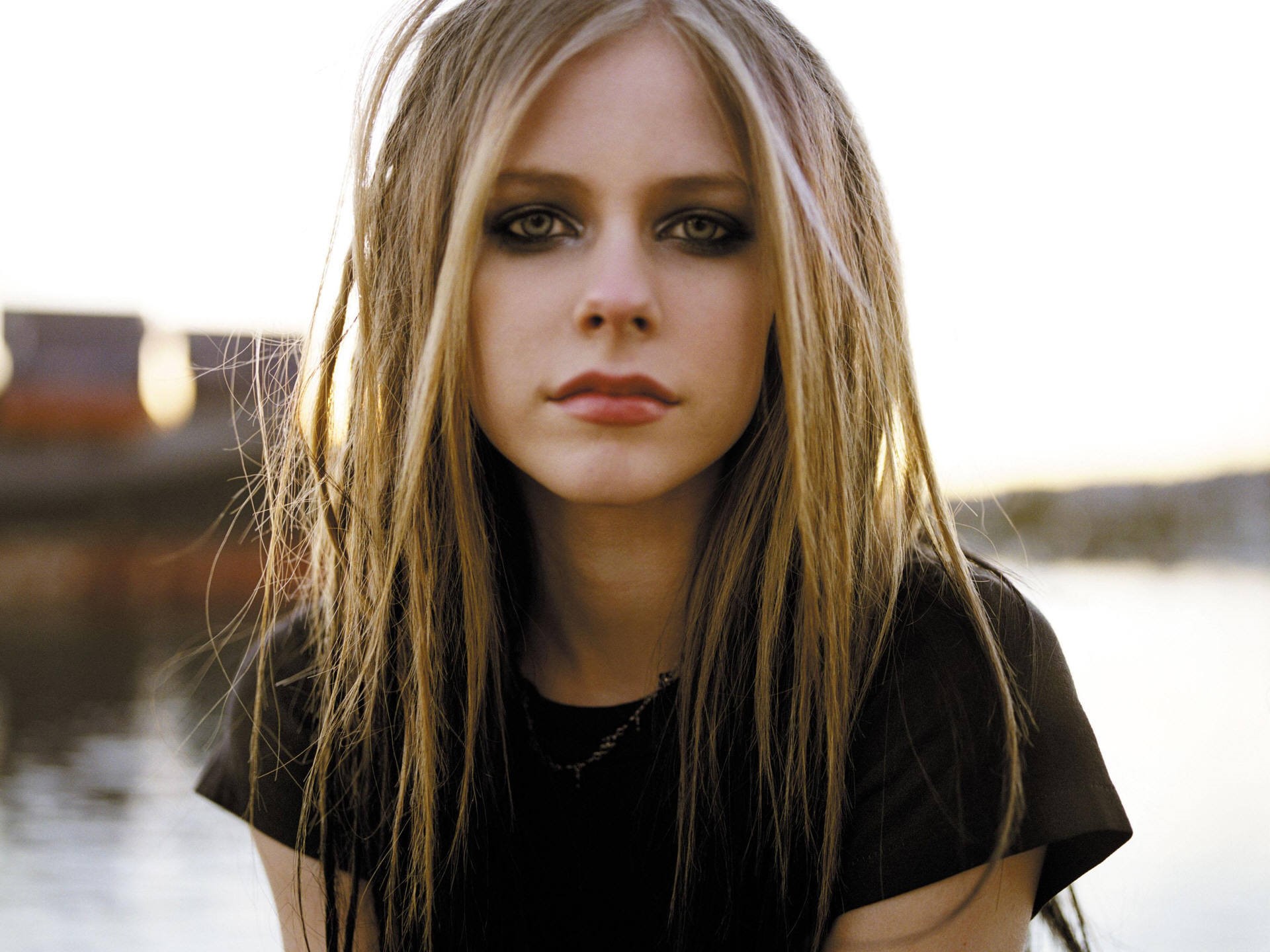
You remember the tie. Or maybe the thick black eyeliner and the way she gripped a microphone like she was ready to fight the entire pop music industry at once. In the early 2000s, everything felt manufactured. We had bubblegum pop stars dancing in synchronized formation, and then, suddenly, there was this girl from Napanee, Ontario, skateboarding into the frame. People always ask, how old was Avril Lavigne in 2002, because she looked like a kid, but she sounded like she’d already lived ten lives.
She was just 17.
That’s the short answer. When Let Go dropped on June 4, 2002, Avril was still a teenager who technically wasn't even old enough to vote in the United States. She turned 18 later that year, on September 27. It's wild to think about now. Most 17-year-olds are worrying about prom or failing their driving test, but Avril was busy selling millions of records and becoming the "Anti-Britney."
The "Let Go" Era and the Mystery of Her Age
The industry didn't really know what to do with her at first. Labels wanted her to sing folk songs or country-tinged ballads because she had this massive, crystalline voice that didn't quite match her baggy pants. But she pushed back. Hard.
Avril was 16 when she signed her deal with Arista Records, and by the time she was actually 17 in 2002, she had shaped the sound of a generation. If you look at the "Complicated" music video, you see a girl who is basically a child in terms of legal standing, yet she’s leading a pack of boys through a mall, causing chaos. It resonated because it was real. Or at least, it felt more real than what else was on TRL at the time.
Honestly, her age was her superpower. If she had been 25, the angst wouldn't have worked. It would have felt like a costume. But because she was literally 17 years old in 2002, the lyrics to "Sk8er Boi" and "Anything But Ordinary" felt like diary entries. She wasn't "performing" being a teenager; she was surviving it in front of a global audience.
Breaking Down the Timeline
Wait, let's get specific. Because the math matters when you're looking at someone's career trajectory.
In January 2002, Avril was 17 and finishing up the recording process for her debut album. By the time "Complicated" hit the airwaves in March, she was still 17. When she performed at the MTV Video Music Awards in August—wearing that iconic white tank top and the tie—she was still 17. She didn't hit the big 1-8 until the fall of that year, right as "Sk8er Boi" was peaking.
She was a minor.
Think about the pressure of that for a second. Most of us at 17 were stressed about a chemistry quiz. She was carrying the financial weight of a major label's quarterly earnings on her back.
Why 17 Was the Magic Number
The reason we still care about how old Avril Lavigne was in 2002 is that she filled a vacuum. The late 90s were dominated by perfection. Everything was glossy. Avril arrived with chipped nail polish.
There’s a specific kind of confidence that only 17-year-olds have. It’s that "I know everything and the world is wrong" energy. You lose it once you hit 20 and realize life is complicated (pun intended). Because she was 17, she didn't have the "industry filter" yet. She famously called out interviewers who asked dumb questions about her clothes. She was prickly. She was awkward. She was exactly what kids who didn't fit into the "preppy" mold needed.
According to various industry retrospectives, including deep dives from Rolling Stone, Arista spent roughly $2 million developing her. That’s a massive gamble on a teenager. But it paid off because the demographic she targeted—other 17-year-olds—saw themselves in her.
The Impact of Let Go
The album Let Go didn't just sell; it exploded. It went 6x Platinum in the U.S. and even higher in other territories. By the time 2002 ended, she was the best-selling female artist of the year.
It's actually kind of funny. We look back at 2002 as this ancient era of flip phones and low-rise jeans, but the themes she was singing about haven't aged a day. Feeling like a misfit? Check. Hating the way people put on a "fake" persona? Check. Wanting to just skate and ignore the world? Definitely check.
Comparisons and Misconceptions
People often lump her in with the "Class of 2002" pop stars, but the age gap mattered. Britney Spears was already 20 and transitioning into a much more "adult" image with Britney. Christina Aguilera was 21 and about to release Stripped.
Avril was the baby of the group.
This led to some weird media narratives. Some critics tried to claim she was a "manufactured rebel." They pointed to the fact that she didn't actually write every single note of the music herself—she collaborated with The Matrix (a production team). But that criticism was always a bit unfair. Most 17-year-olds don't produce their own albums from scratch. The core sentiment, the voice, and the aesthetic were hers. She was the one who refused to wear the skimpy outfits the label suggested.
The "Clone" Theory (Yes, We Have To Mention It)
If you spend more than five minutes on the internet, you’ll find the conspiracy theory that Avril Lavigne died and was replaced by a lookalike named Melissa. Most versions of this story claim the switch happened shortly after Let Go.
It’s nonsense.
The theory usually points to changes in her appearance or "clues" in her lyrics. But the real explanation is much simpler: she was 17 in 2002. People change between 17 and 30. Their faces thin out. Their style evolves. Their voices deepen. If you look at a photo of yourself at 17 and then at 30, you’d probably look like a different person too.
The Cultural Legacy of a 17-Year-Old Canadian
We can't overstate how much she changed the landscape for women in rock. Before Avril, the "girl with a guitar" vibe was mostly reserved for the Lilith Fair crowd—Sheryl Crow, Alanis Morissette, Sarah McLachlan. These were adult women writing adult songs.
Avril brought that energy to the mall.
She made it okay for girls to be loud and messy. She basically paved the road for everyone from Hayley Williams of Paramore to Billie Eilish and Olivia Rodrigo. In fact, Olivia Rodrigo has cited Avril as a massive influence, even bringing her out on stage to perform together. When you look at Olivia’s "Sour" era, it’s basically a modern 2020s mirror of what Avril was doing when she was 17 in 2002.
It’s the same DNA: teenage heartbreak, a bit of snark, and a lot of power chords.
How to Channel That 2002 Energy Today
If you’re feeling nostalgic or just want to understand the "Avril effect" better, there are a few things you can do to revisit that moment in time.
First, go back and listen to the B-sides of Let Go. Tracks like "Get Over It" or "Falling Down" (from the Sweet Home Alabama soundtrack) capture that raw 17-year-old angst even better than some of the radio hits. They aren't as polished, and you can hear the grit in her voice.
Second, watch the Try To Shut Me Up tour DVD. It’s a time capsule. It shows her backstage being a total kid—pranking her bandmates, complaining about being tired, and just generally being a teenager who happened to be the most famous person on the planet at that moment.
Finally, appreciate the longevity. Most "teen sensations" disappear after 18 months. Avril didn't. She navigated the transition from a 17-year-old skate-punk to a businesswoman with her own clothing line (Abbey Dawn) and a long-standing career that still sells out arenas.
What to Look for Next
If you want to keep the nostalgia trip going, check out the following:
- The 20th Anniversary Edition of Let Go: It was released recently and includes the original version of "Breakaway" (which she wrote but eventually gave to Kelly Clarkson). Hearing Avril sing it at that age gives the song a completely different, more vulnerable feel.
- Modern Pop-Punk Playlists: Listen to artists like Willow Smith or Meet Me @ The Altar. You’ll hear the direct sonic lineage of what Avril started in 2002.
- Documentary Footage: Look for early 2002 interviews on YouTube. It’s fascinating to see how the media treated a 17-year-old girl back then versus how we treat young stars now. The "bratty" label she got was often just a young woman standing her ground.
Avril Lavigne wasn't just a 17-year-old with a catchy song in 2002. She was a cultural shift. She proved that you didn't have to be a polished "adult" to command the world's attention. You just had to be yourself—even if "yourself" was a skater girl from a small town who didn't quite know where she fit in yet.
The next time you hear those opening chords of "Complicated," remember that the person behind them was barely out of high school, taking on the world with nothing but a tie and a dream. That’s a pretty incredible legacy for a 17-year-old.